Invited Speakers
Welcome to our HWRS 2026 presenters. Explore the expertise and insights of our invited speakers, with further announcements to come. Stay tuned for updates as we continue to build an outstanding program.
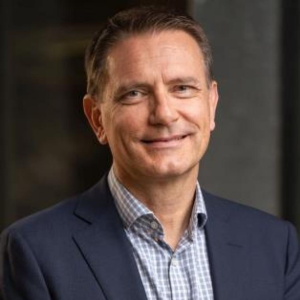
Prof. Holger Maier
Munro Oration Speaker
Professor, School of Civil, Environmental and Mining Engineering, University of Adelaide
Read full biography here
Holger is Professor of Environmental Engineering at Adelaide University and an Honorary Professorial Fellow at the University of Melbourne. His research interests are in developing and applying methods that result in sustainable outcomes, especially when dealing with complex systems in uncertain environments. Examples of this include the development of decision support systems for long-term disaster risk reduction under a range of plausible futures, the development of innovative climate risk assessment and adaptation methods for water systems, the development of adaptive approaches to urban stormwater management using smart technologies and the development of innovative approaches and decision support tools for achieving the renewable energy transition in a sustainable manner. This includes elements of modelling (with a particular focus on AI and machine learning), optimisation (with a particular focus on evolutionary algorithms) and decision support (with a particular focus on strategic planning under deep uncertainty). Holger is a Fellow of the Modelling and Simulation Society of Australia and New Zealand and a recipient of the Biennial Medals of the International Environmental Modelling and Simulation Society and the Modelling and Simulation Society of Australia and New Zealand.
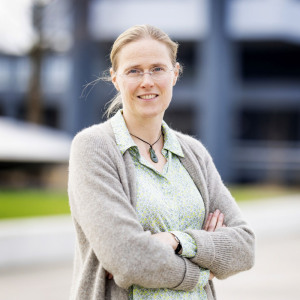
Dr. Ellis Penning
Keynote Speaker
Expert on Nature-based Solutions and Aquatic Ecology
Read full biography here
Dr. Penning is one of the leading experts on Nature Based Solutions within Deltares (Delft, the Netherlands) and carries out various national and international projects directly related to the topic. Dr. Penning’s work focuses on providing the necessary knowledge to upscale the implementation of Nature-based Solutions with a focus on freshwater ecosystems and their surrounding catchments.
An ecologist by training, Ellis Penning is specifically focussing on the role of vegetation in aquatic systems, both from a flood risk and environmental quality point of view. Providing new evidence via measured data from both field and flume experiments on the interaction between vegetation and its surrounding environment helps to create a better understanding and provide the basis for better management of these systems.
She is currently coordinating the EU Horizon project SpongeScapes and co-coordinates the follow-up project SpongeWorks, which jointly work on providing the evidence base for nature-based solutions to enhance water retention in catchments to cater to the increasing challenges of managing both floods and droughts. These projects have a strong focus on the actual implementation of these measures in the field together with stakeholders.
She is involved in various other EU_Horizon projects, such as Danube4all, MERLIN, REXUS, FutureLakes and Commit2Green, in which Ecosystem-based Adaptation, Nature-based Solutions, and Ecosystem Restoration are the key focus and where both the role of biophysical system understanding and stakeholder interaction and socio-economic assessments are given specific attention.
She has been involved in studies on the management of riparian floodplains by cyclic floodplain rejuvenation and implementation of natural flood defences such as vegetated foreshores, the development of a general concept for setting international Environmental Flow Requirements and providing guidelines for the implementation of shallow vegetated foreshores. In Singapore she contributed to the management of urban aquatic ecosystems and instream wetlands, translating experiences from the European WFD implementation process to the Singaporean situation. In India, she is involved in the large-scale implementation of NbS for embankment and riverbank erosion management in the Brahmaputra river in Assam.
Dr. Penning has over 10 years of close cooperation with the Korean Institute of Civil Engineering and Building Technology (KICT) with a focus on ecohydraulic research focusing on flow-vegetation-morphology interactions and its application to river management practices in Korea and Europe, and chaired the international steering committee of the KICT River Experiment Centre in Andong.
Dr. Penning chairs the IAHR working group on Nature-based Solutions. She is currently supervising 3 PhD candidates as an external supervisor and regularly gives guest lectures at various Dutch universities on the topic of Nature-based Solutions.
Stay Connected
Subscribe today and get the latest notifications on HWRS 2026